
Drop shots are more common — but are they a winning advantage?
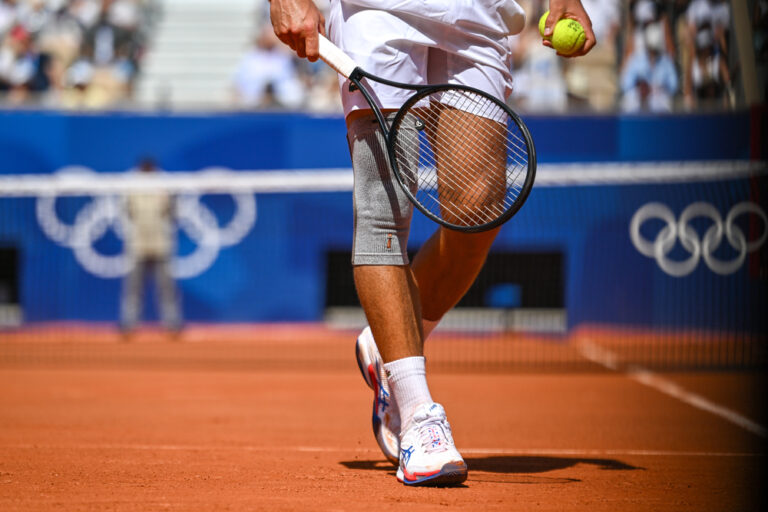
In recent years, the drop shot has surged in popularity — largely thanks to Carlos Alcaraz. It’s easy to believe the drop shot is a game-changer, especially on slower surfaces like clay, where it seems tailor-made for Roland Garros. But does the drop shot really play that big a role in deciding matches?
At first glance, it all seems to make sense: the slow surface takes the speed off the ball, and a drop shot barely bounces, giving the opponent little chance to chase it down. But the data tell a different story.
The drop shot remains a rarity. Since 2021, its usage on clay has increased only slightly — from 1.7% to 2.3% of all shots. Its success rate is around 53.8% — just barely over half. About 19% of drop shots end in outright errors, many of them unforced and costly. In the broader context, drop shots account for just over three in every thousand strokes and contribute approximately 0.09% to a player’s overall win rate. These figures are based on official Roland Garros match analytics.
At every Grand Slam, there are matches where the drop shot appears to be a highly effective tactical weapon. Roland Garros 2025 was no exception. Take Novak Djokovic’s match against Alexander Zverev: he attempted 35 drop shots and won 22 of them — a 63% success rate.
However, against Jannik Sinner, the same tactic failed to deliver. The drops weren’t landing cleanly, and Djokovic’s frequent backhand crosscourt setups became predictable. Of the 20 attempts, 6 ended in unforced errors and only 2 resulted in outright winners, while rallies continued in 12 instances. Sinner consistently anticipated the tactic and neutralized it. By the second set, Djokovic had largely abandoned the approach under mounting baseline pressure.
A similar pattern emerged with Alexander Bublik. Against Jack Draper, he deployed 37 drop shots — many executed with precision, with 32% being clean winners. Bublik’s touch is undeniably elite. Yet when he attempted the same strategy against Sinner, its effectiveness dropped. With only 28% clean outcomes, and Sinner dominating in other facets of the game, the drop shot failed to shift momentum. Apart from a competitive second set (7–5), Sinner closed the match emphatically: 6–0, 6–1.
Aryna Sabalenka provides another telling case. Her drop shot usage was minimal early in the tournament: just 7 against Anisimova, 10 combined against Qinwen Zheng and Iga Swiatek. But in the final against Coco Gauff, she attempted 23. Yet the impact of these shots is difficult to isolate in a match where Sabalenka committed 70 unforced errors.
The drop shots lacked integration into a broader tactical plan and seemed more reactive than strategic. Struggling to penetrate Gauff’s defense, Sabalenka often resorted to improvised plays that contributed more to her visible frustration than to tactical variation.
The drop shot is a powerful tool when used with precision and surprise. It can disrupt rhythm and create visual flair. However, its statistical contribution to match outcomes remains marginal. At Roland Garros 2025, the most successful players were those who dominated from the baseline, managed tempo, and executed high-percentage patterns. Jannik Sinner, not naturally a clay-court player, exemplified this approach — a reflection of Sinner’s dominance. He lost only to Carlos Alcaraz — a player who, at least for now, remains the superior force on clay.
