
The grass season as a stress test: why Wimbledon 2025 has already made history
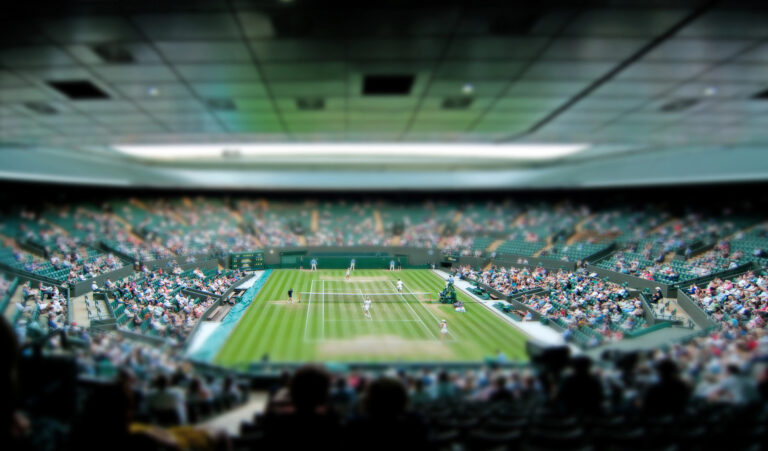
This year’s Wimbledon is shaping up to be one of the most unpredictable tournaments in recent memory. With over a third of seeded players already out, it’s clear: grass punishes hesitation — and this time, no name is safe.
In the men’s draw, the first round ended with a record: 13 seeded players lost their opening matches — the highest number ever recorded at a Grand Slam. Among those eliminated were Medvedev, Tsitsipas, Rune, Zverev, Bublik, Musetti, and Draper. On the women’s side, Gauff, Pegula, Paolini, Qinwen Zheng, and Madison Keys were all knocked out early.
There are multiple reasons behind this disruption. Grass is still the least familiar surface on tour: the season is short, high-quality preparation is limited, and the game is fast with unpredictable bounces. It’s a stress test not just for technique, but for mental resilience.
Notably, many of the tour’s young leaders failed that test. Tsitsipas played through back pain, and his coach Goran Ivanisevic openly stated that Stefanos is the most unprepared player he’s ever worked with. Zverev’s burnout has reportedly turned into depression — a situation his own brother publicly dismissed, saying “others have it worse in Africa.” Medvedev, despite reaching the final in Halle, once again failed to adapt his game to grass in a Grand Slam setting.
In contrast, the veterans stood out. Novak Djokovic, though no longer as physically dominant, has adapted by improving his serve and managing tempo. Marin Cilic put together a surprising run, eliminating both Draper and Munar. Fabio Fognini pushed Alcaraz to five sets, proving once again that experience can be just as decisive as form.
Read more: Drop shots are more common — but are they a winning advantage?
Meanwhile, Sinner and Alcaraz continue to establish themselves as the new core of the ATP. Sinner advanced after Grigor Dimitrov retired due to injury — despite leading the world No. 1 by two sets to love. It was an unexpected turn of events that added another dramatic layer to this year’s tournament. On the women’s side, Aryna Sabalenka, despite a shaky start, looks like a strong contender for the final.
Men’s tennis is undergoing a difficult generational transition. The group expected to succeed the Big Three continues to struggle — not only with results, but with handling pressure. Wimbledon 2025 has become a litmus test: it revealed who can survive in unstable conditions and who is still fighting themselves more than their opponents.
Cover photo: Depositphotos